There will come
a morning
I don’t wake and think first of you.
But that day can wait.
See the entire poem here at Terrain.org.
a morning
I don’t wake and think first of you.
But that day can wait.
See the entire poem here at Terrain.org.
| When We Two Parted | ||
| by George Gordon Byron | ||
When we two parted
   In silence and tears,
Half broken-hearted
   To sever for years,
Pale grew thy cheek and cold,
   Colder thy kiss;
Truly that hour foretold
   Sorrow to this.

The dew of the morning
   Sunk chill on my brow--
It felt like the warning
   Of what I feel now.
Thy vows are all broken,
   And light is thy fame;
I hear thy name spoken,
   And share in its shame.

They name thee before me,
   A knell to mine ear;
A shudder comes o'er me--
   Why wert thou so dear?
They know not I knew thee,
   Who knew thee too well--
Long, long shall I rue thee,
   Too deeply to tell.

In secret we met--
   In silence I grieve,
That thy heart could forget,
   Thy spirit deceive.
If I should meet thee
   After long years,
How should I greet thee?--
With silence and tears. | ||


 To get to Heritage Key I had to recreate my Second Life Avatar on the OpenSim grid. This has been interesting to say the least. I am not yet ready to desert SL, but it's nice to know I now
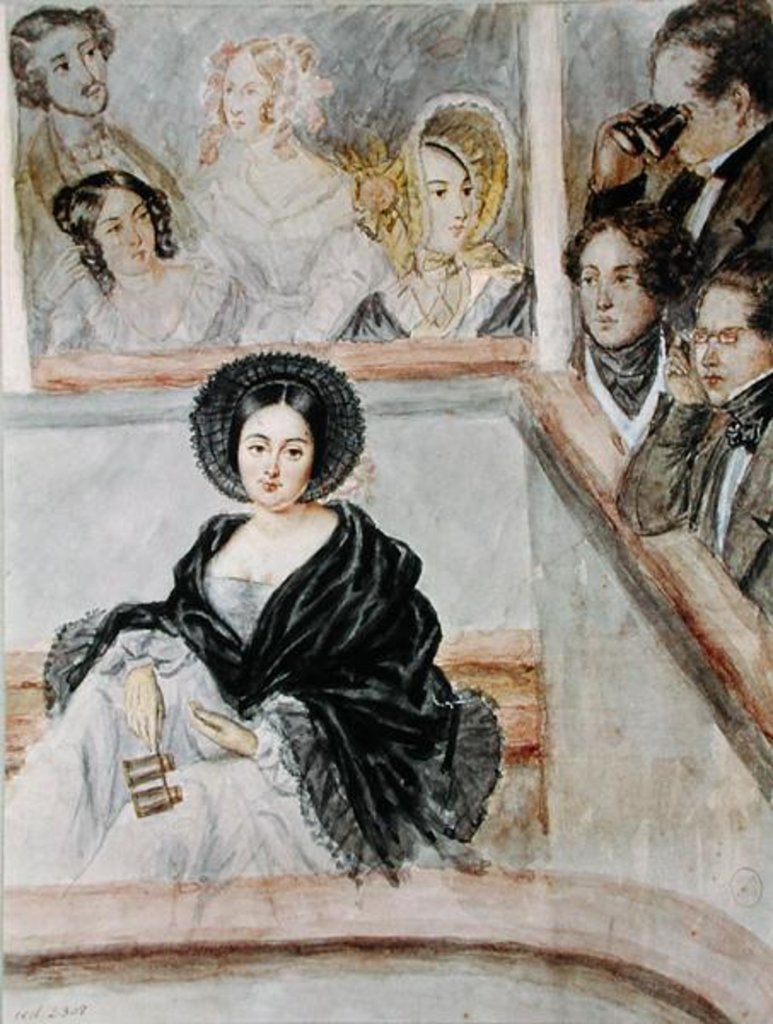 "Marie Duplessis (January 15, 1824 - February 3, 1847) was a French courtesan and mistress to a number of prominent and wealthy men. She was the inspiration for Marguerite Gautier, the main character of La Dame aux Camélias by Alexandre Dumas the younger, one of Duplessis' lovers. Much of what is known about her has been derived from the literary persona and contemporary legends."
Rome made a fine art of licensed prostitution all the way up through the Renaissance. Influenced by the hetairea brought back to the city from wars, class divisions arose among the various women engaged in prostitution. According to Marcellus, "This is the difference between a meretrix [courtesan] and a prostibula [ a common streetwalker]: a meretrix is of a more honorable station and calling; for meretrices are so named a merendo (from earning wages) because they plied their calling only by night; prostibulu because they stand before the stabulum (stall) for gain both by day and night."
The courtesans of ancient Rome were real and many. Roman men turned to their slave women for basic sexual gratification, to wives to provide them with children, but it was to the courtesans, the foreign hetairea to whom they turned for comfort, companionship and, indeed, for romance. These women may have held more power through their patrons than even the matrons of Rome. And whether or not one of them named Lalage was a vision in the heart of the ordinary Roman soldier as Kipling's beautiful poem claims, there is no doubt that her trade was a thriving one with over 40 different terms for the registration of prostitution in Rome alone.
The name Lalage literally means to talk, and likely--if there was a real Lalage--it was for her mind and her conversation she was beloved, not just for her body. That, gentlemen, is all the difference between a courtesan and a prostitute.
"Give me my Romeo; and, when he shall die,
Take him and cut him out in little stars,
And he will make the face of heaven so fine
That all the world will be in love with night
And pay no worship to the garish sun."
-- from Romeo & Juliet
